
A busy SOC can see hundreds of alerts a day, and most of them are harmless. Triage is the skill of deciding, quickly and correctly, which ones are not.
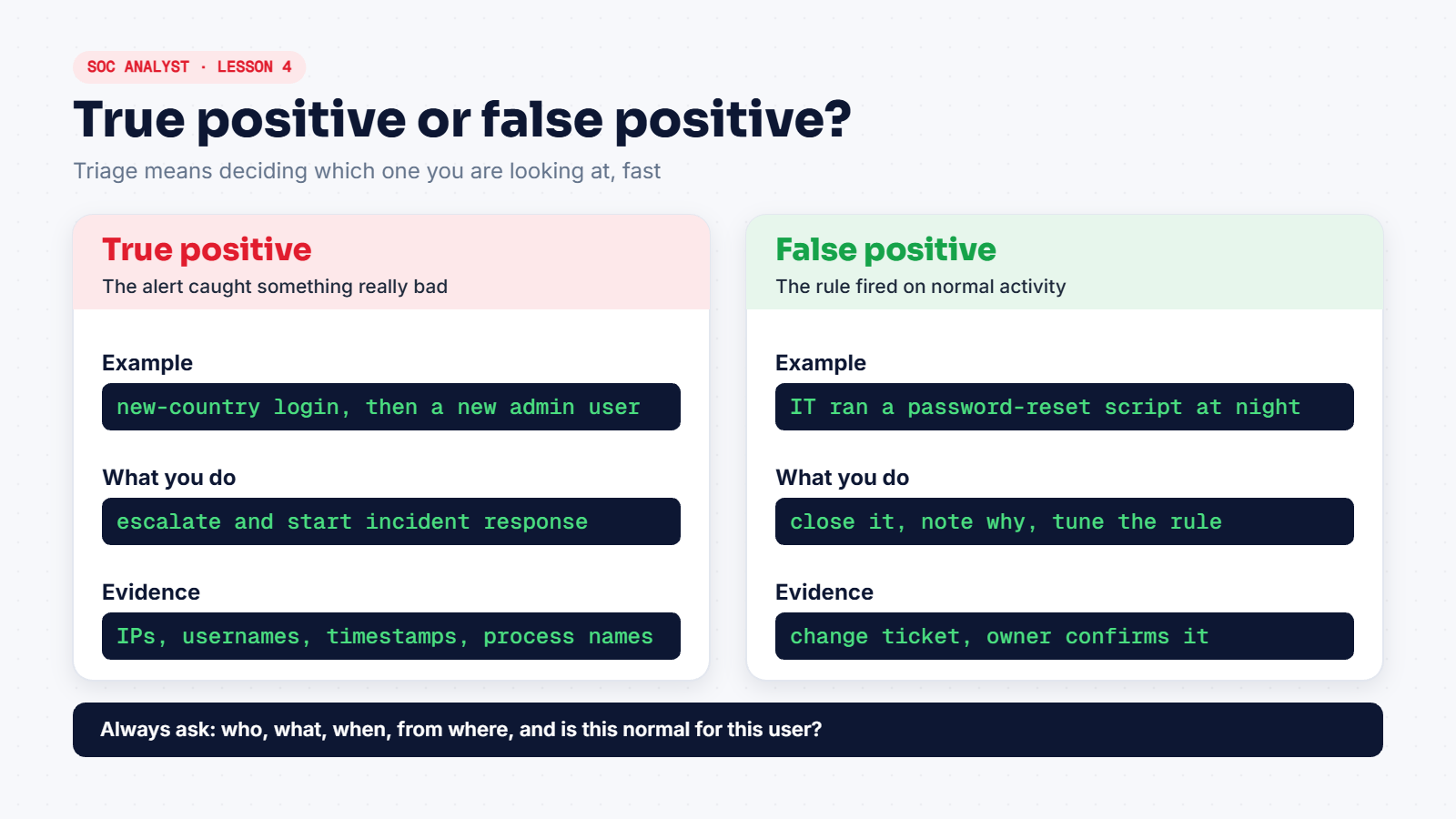
The four outcomes
| Alert fired | No alert | |
|---|---|---|
| Real attack | True positive | False negative (missed!) |
| Normal activity | False positive | True negative |
False positives waste time. False negatives are worse, because nobody even looks. Good triage keeps both low.
The five questions
For every alert, answer these before you decide anything:
- Who? Which user or machine is involved? Is it an admin, a service account, an intern?
- What? What exactly happened? A login, a new process, a file change?
- When? At 3 AM on a Sunday, or during office hours?
- From where? A known office IP, a VPN, or a country the company doesn't work in?
- Is it normal? Has this user done this before? Your SIEM history will tell you.
A worked example
Alert: "Impossible travel. User priya logged in from Mumbai at 10:02 and from Frankfurt at 10:15."
Nobody flies from Mumbai to Frankfurt in 13 minutes, so this looks bad. But you check the Frankfurt IP and find it belongs to the company's own VPN provider. You message Priya, and she confirms she turned on the VPN at 10:14.
Verdict: false positive. Now write it down.
Alert:   Impossible travel – priya
Verdict: False positive
Reason:  Frankfurt IP belongs to the company VPN (checked IP owner).
         User confirmed on Teams at 10:20.
Action:  Closed. Suggested adding the VPN range to the rule's exceptions.
A colleague should be able to read your note in ten seconds and agree with you.
Watch out for alert fatigue
After the fiftieth harmless alert, it's tempting to close the next one without looking. That's exactly the alert attackers hope you'll skip. If a rule keeps firing on harmless activity, ask for the rule to be tuned instead of ignoring it.